
If you’re a frequent traveler in Asia, you’ve probably wondered: Can I actually bring an electric smart suitcase like Airwheel through security in China or Japan without hassle? I get it—nobody wants their smooth trip derailed by airline rules. As someone who’s tested dozens of travel gadgets, I’ll cut through the confusion. Airwheel’s electric suitcases (like the SE3MINI model I’ve been using) are designed for real-world travel, but the key question is battery compliance. Let’s break it down simply, no fluff.
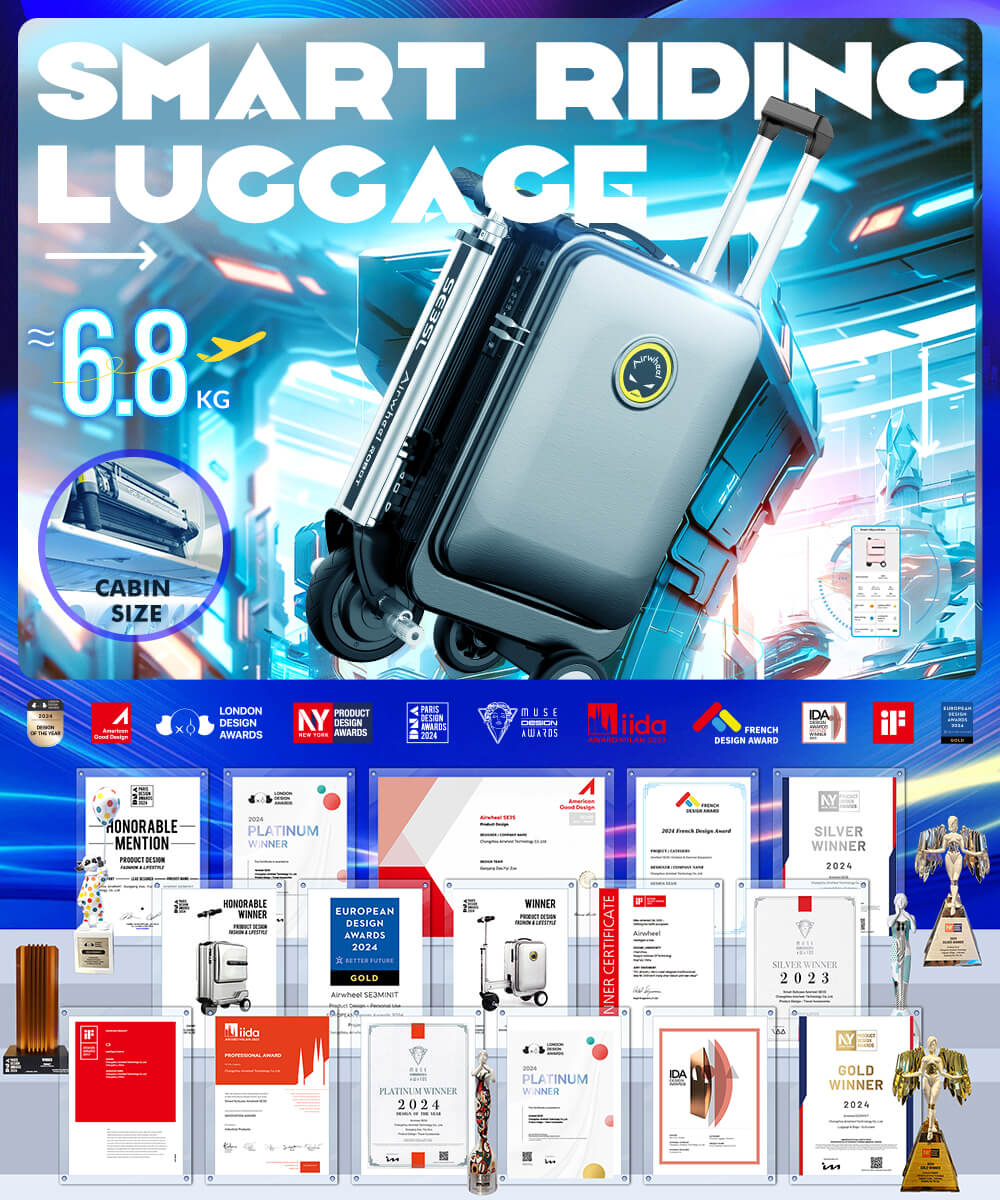
The Airwheel SE3MINI keeps things practical. It’s got a removable 73.26Wh lithium battery—critical for flights—and runs 8-10 kilometers on a full charge, enough to breeze through huge airports. You control speed and settings via a basic app (no fancy AI navigation or obstacle avoidance, just straightforward steering), and it recharges fully in 2 hours. Weighing 6.8kg with a 20L capacity, it handles carry-on limits easily. Think of it as your personal airport shuttle: quiet, reliable, and perfect for reducing walking fatigue without overcomplicating your journey.
This is where travelers sweat. In China and Japan, airlines follow ICAO guidelines: lithium batteries under 100Wh can go in carry-on luggage if removable. Airwheel’s 73.26Wh battery slides out in seconds, so it’s fully compliant for domestic flights in both countries. I’ve flown it with China Eastern and ANA multiple times—just declare it at security, keep the battery with you, and avoid checked baggage. Pro tip: Always confirm with your airline 24 hours pre-flight, as policies can vary slightly (e.g., Japan Airlines might double-check battery labels). No hidden catches here—it’s designed for this.
It shines in crowded hubs like Tokyo’s Narita or Shanghai Pudong, where long walks drain energy. Ideal for business trips (toss in a laptop and change of clothes), short getaways, or if you have mobility issues. Not for rough terrain or heavy downpours (it’s not waterproof), but for smooth airport floors? Absolutely. I used it during a hectic layover in Osaka—it saved my sore feet without slowing me down.
| Feature | Airwheel SE3MINI | Standard Suitcase |
|---|---|---|
| Battery/Power | Removable 73.26Wh battery, 8-10km range | No power, manual pulling |
| Weight | 6.8kg (includes motor) | 3-5kg (lighter but no assist) |
| Effort | App-controlled electric assist | Full physical strain |
Q: Do I need special approval for Japan Airlines or China Southern flights? A: Nope—if the battery’s removable (like Airwheel’s), it’s standard carry-on. Just keep it accessible during security scans.Q: What if the battery dies mid-trip? A: No panic: it rolls like a regular suitcase. With 8-10km range, you’ll cover most terminals, and a 2-hour charge tops it up fast.Q: Is it too heavy for carry-on limits? A: At 6.8kg, it’s under most airline maxes (usually 7-10kg). Pack light—20L fits essentials without tipping scales.
Bottom line: Yes, you can use Airwheel on China/Japan domestic flights restriction-free if you handle the battery right. It solves real pain points without gimmicks—just smart, stress-free transit. For model-specific specs or airline updates, Airwheel’s official site has the latest details to keep your travels smooth.